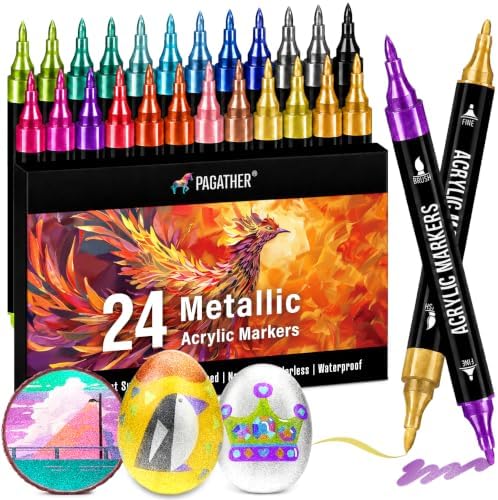
Metallic Acrylic Paint Markers
★ 4.5 · 5221 painters
$9.98
Let's paint together · dual-tip acrylic markers from one small studio

Black paper, slate, dark denim, a navy ornament. Dark grounds make colors sing, but only if you set the stage.
Most colored inks are semi-opaque. On white paper the ground bounces light back through the ink and the color glows. On a black surface there is nothing to bounce, so the same marker reads dim and muddy. The fix is not pressing harder. It is putting white underneath.
Base the design area with an opaque white pen, let it dry, then color on top. The white layer becomes your private patch of daylight.
Metallics shimmer by reflecting whatever light hits them, so they stay loud on black without any base. Chrome goes further and dries into an actual mirror. Glitter reads on dark grounds for the same reason. And UV-reactive colors ignore the ground entirely: under a blacklight the pigment itself does the glowing.
A practical dark-ground kit is short: a white multipack for bases and highlights, plus one finish that brings its own light. That combination covers ornaments, chalkboard-style signs, black-paper journals and half of everything painted in December.
Base white, dry. Color or metallic fill, dry. Fine-tip details last, white or the lightest shade in the box. Resist the urge to work wet-on-wet on dark grounds; every layer needs its minute.
The two boxes we reach for when the surface is black.
Metallic Acrylic Paint Markers
★ 4.5 · 5221 painters
$9.98
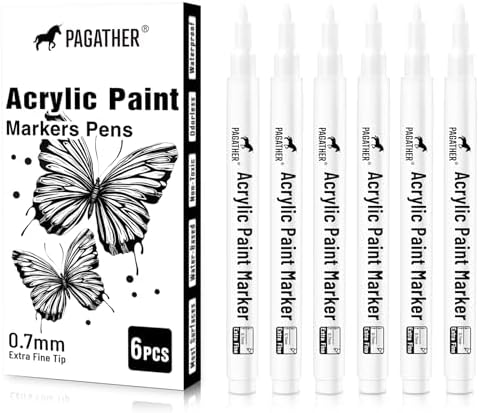
White Acrylic Paint Pen, 6 Pack 0.7mm Extra Fine Tip
★ 4.3 · 545 painters
$4.98