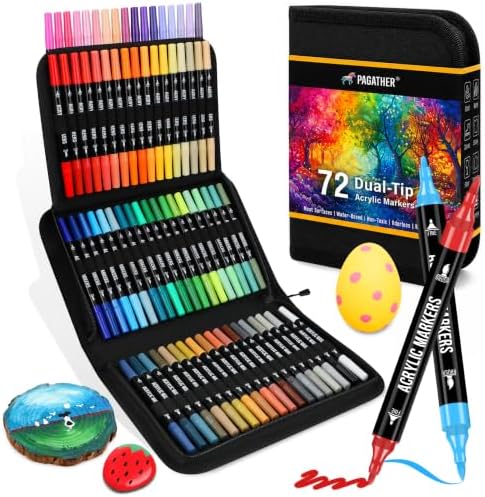
Acrylic Paint Markers, 72 Colors Dual Tip Fine & Brush Pens Set
★ 4.6 · 5372 painters
$22.08
Let's paint together · dual-tip acrylic markers from one small studio

Every acrylic set we make carries both ends on one barrel. Knowing which end to uncap is half the craft.
Edges, lettering, dots, whiskers, the highlight in an eye. The extra-fine tip holds a consistent width as long as you keep the marker fairly upright. It is also the end for working over dried fills, because it deposits less ink and will not reactivate the layer underneath.
Our single-tip specialty pens, the 0.7 mm white and glitter, are fine ends that decided to specialize. Treat them the same way: upright, light pressure, over dry ground.
Coverage and character. The brush tip flexes, so a stroke swells when you press and tapers when you lift, like a small round brush that never needs rinsing. Fill shapes with it, paint leaves and petals in single strokes, blend two shades while both are wet.
It is also the faster end. A palm-sized rock fills in under a minute with the brush tip and would take five with the fine end, in stripes.
Brush first, fine last, dry in between. Nearly every piece we paint in the studio follows that order. When a design goes wrong, the cause is usually reversed order: details drawn first, then smeared by the fill.
Start small or start serious. Both carry the same two tips.
Acrylic Paint Markers, 72 Colors Dual Tip Fine & Brush Pens Set
★ 4.6 · 5372 painters
$22.08
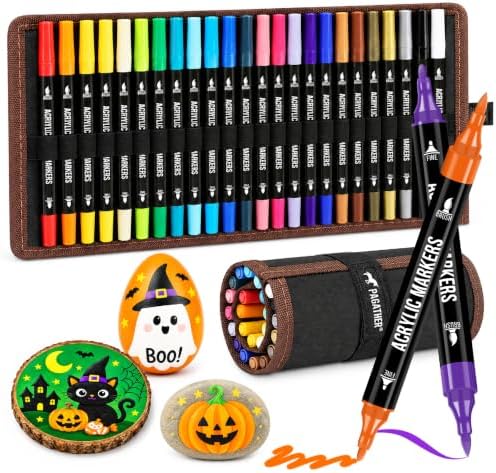
Acrylic Paint Markers, 24 Colors Dual Tip Fine & Brush Pens Set
★ 4.6 · 5372 painters
$8.08