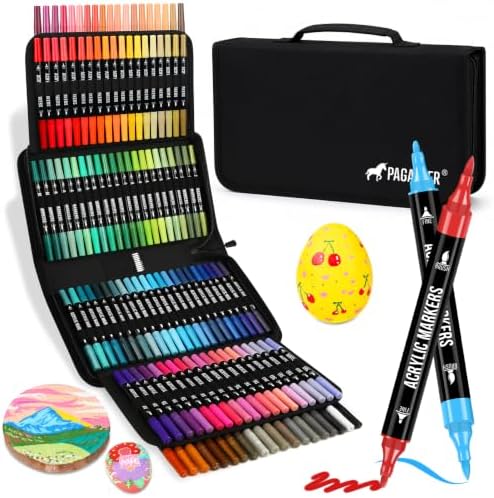
Acrylic Paint Markers, 120 Colors Dual Tip Fine & Brush Pens Set
★ 4.6 · 5372 painters
$33.98
Let's paint together · dual-tip acrylic markers from one small studio

Acrylic markers are simple machines. A little care at the start and the end of a session keeps them flowing for years.
Shake first, with the cap on. Then press the tip gently on scrap paper a few times until ink reaches the fibers. Valve-fed pens like our chrome trio want a different start: twist the cap several times to prime the valve, then test on scrap. Never press a chrome tip hard to hurry it; the valve meters the flow and pressing floods it.
Store markers flat. Horizontal storage keeps pigment distributed along the barrel instead of settling at one end, which is the main cause of pale first strokes. The elastic loops in our canvas cases hold everything flat by design, but a drawer works as long as the pens lie down.
Cap tightly, every time. An acrylic tip left open over lunch usually recovers; left open overnight, it may not. And keep boxes away from radiators and car dashboards. Heat is harder on ink than winter cold.
Pale or skipping stroke: shake, then prime on scrap paper again. Dried tip: touch it to a damp paper towel for a few seconds, then prime. A marker used on rough stone all afternoon may just have a worn tip doing its best; rotate it a quarter turn and the fresh edge writes cleaner.
The UV set has one extra rule worth repeating: shake it vertically before first use. Its pigments are heavier and settle faster than the classic colors.
The case keeps them flat, the valve keeps them flowing.
Acrylic Paint Markers, 120 Colors Dual Tip Fine & Brush Pens Set
★ 4.6 · 5372 painters
$33.98
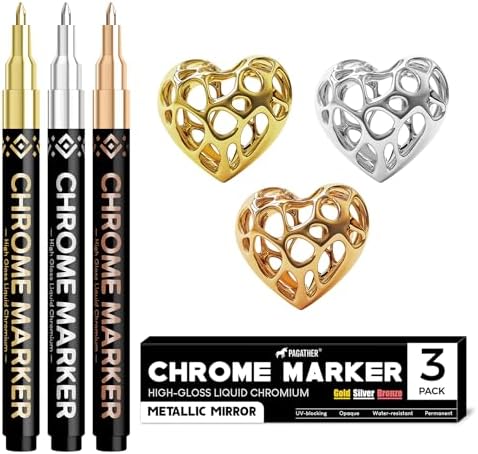
Chrome Paint Markers, Gold Silver Bronze Permanent Mirror Pens
★ 4.1 · 1525 painters
$6.98